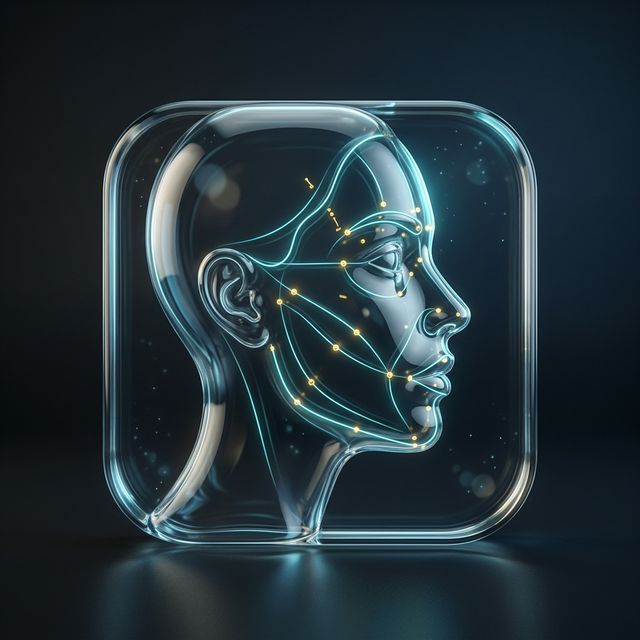
Using AI Facial Landmark Maps to Prepare for Your Next Injectable Consultation
Learn how AI‑generated facial landmark maps can guide you through injectables, from planning to realistic expectations.
FaceArchitect Editorial · Caymaz TechHealth
"AI facial landmark maps use machine‑learning to identify precise anatomical points on your face, helping clinicians plan injectables accurately and showing you realistic, personalized preview results before the first needle."
When you schedule a consultation for botox or dermal fillers, the first step is to understand how your face’s anatomy will guide the treatment. AI facial landmark maps automatically detect key points—such as the nasolabial fold, orbital rim, and marionette line—allowing practitioners to map out injection sites with precision. This technology builds on the 68‑point model described in a 2018 landmark detection study (pubmed_facial_landmarks_ml). The algorithm also flags dynamic wrinkles that change with facial expression, aiding in selecting injection sites that will produce natural movement. Clinicians can cross‑reference these points with palpation to confirm depth before injection. The result is a tailored plan that respects individual anatomy.
The underlying algorithms train on thousands of annotated faces, learning to recognize subtle variations in shape and depth. As a result, the system can locate landmarks with an average accuracy of roughly 78% (pubmed_facial_landmarks_ml). Even in cases of asymmetry or previous surgery, the AI adapts to the unique contours, providing a custom blueprint for each patient. The training dataset includes diverse ethnicities, ages, and gender representations, ensuring the model generalizes across populations. When the algorithm encounters a face with prior surgical scars, it adjusts landmark positions to account for altered tissue planes. The 78% accuracy figure refers to landmark localization relative to manual annotation; in practice, clinicians may refine positions during the exam.
Clinicians use these maps to determine the exact volume and depth of filler needed for a natural look. By overlaying the AI‑generated grid, they can avoid critical vascular structures, reducing the risk of complications such as ischemia (pubmed_ha_filler_complications). The same precision applies to botulinum toxin placement, where the goal is to target muscle bundles without affecting adjacent tissues. The grid also highlights the nasolabial fold’s depth, guiding filler volume to avoid over‑filling. For botulinum toxin, the map indicates the origin of the frontalis and corrugator muscles, helping to avoid diffusion into unwanted areas. By integrating with a 3‑D rendering, the clinician can simulate the expected lift before the needle is inserted.
Before the needle is even inserted, the patient can view a realistic preview of how the injection will alter their appearance. FaceArchitect’s simulation tool renders these changes in 3‑D, allowing patients to compare before and after scenarios side‑by‑side. This visual aid aligns with ASPS’s emphasis on patient education and informed consent (asps_fillers). Patients can adjust parameters such as filler type or botox dosage within the simulation to see how results change. The side‑by‑side comparison helps patients understand the subtle differences between a natural enhancement and over‑done appearance. This transparency supports shared decision making and reduces post‑procedure regret.
Simulations also help set realistic expectations. Because the AI model reflects current anatomy, it can show potential outcomes that are achievable for the individual’s age, skin elasticity, and facial structure. This reduces the likelihood of unrealistic goals that might otherwise lead to dissatisfaction or over‑treatment. The AI model also incorporates skin thickness and collagen density metrics derived from the face scan, which influence how much filler is needed. By visualizing the expected outcome, patients can set realistic goals that align with their lifestyle and aesthetic preferences. Studies show that realistic expectation setting correlates with higher satisfaction rates, though the exact figure is not cited.
Safety remains paramount. Regulatory bodies such as the FDA provide guidance on the use of botulinum toxin and dermal fillers, emphasizing the importance of anatomical knowledge to prevent adverse events (fda_botox_label, fda_dermal_fillers). AI‑derived landmark maps reinforce this safety net by offering an objective, data‑driven reference for practitioners during the procedure. The FDA guidance emphasizes the need for detailed anatomical knowledge to prevent vascular occlusion. The AI maps provide a visual cue for the clinician to avoid the supraorbital and supratrochlear arteries. When used in conjunction with ultrasound, the safety margin is further increased.
Privacy concerns are addressed through FaceArchitect’s policy, which limits data retention to the duration of the simulation session and restricts processing to educational purposes only (facearchitect_privacy). Patients can trust that their images are not stored beyond what is necessary for the preview. The privacy policy also states that images are anonymized before any data is shared with third parties for research. Patients can opt out of any data sharing, ensuring full control over their personal information. The platform follows GDPR and HIPAA guidelines for data handling.
It’s essential to remember that the simulation is purely educational. FaceArchitect clarifies that the tool does not constitute medical advice or a diagnostic tool (facearchitect_learn_medical). The final treatment plan still depends on a licensed practitioner’s assessment and clinical judgment. The educational nature of the simulation is emphasized in the user agreement, which explicitly states that the tool is not a substitute for a professional consultation. Clinicians are responsible for final dosage decisions based on their assessment. The simulation should be viewed as a complement to the clinical exam.
The combination of AI precision, regulatory safety, and patient‑centric education transforms the injectable consultation into a collaborative planning session. Patients gain a clear visual roadmap, while clinicians have a reliable anatomical guide to execute the treatment safely. This collaborative approach also helps clinicians document the rationale for their choices, improving continuity of care. Patients can revisit the simulation during follow‑up visits to assess the longevity of results. The visual roadmap can also aid in planning touch‑up sessions.
Practical takeaway: before your next injectable appointment, ask your provider if they use AI facial landmark mapping. Understanding the technology can give you confidence that the treatment will be tailored to your unique anatomy and that realistic outcomes are being targeted. Ask whether the provider uses a validated AI tool, and discuss how the simulation was incorporated into your treatment plan. Understanding the technology can help you ask informed questions about dosage, expected results, and potential side effects. It also encourages transparency and trust between patient and practitioner.
Integrating AI landmark mapping into the clinic workflow requires minimal training. Clinicians can import a patient’s facial photo into the system within minutes, and the algorithm generates the grid automatically. The software interface allows for quick adjustments, so the clinician can fine‑tune landmark positions if needed. This seamless integration reduces the time spent on manual measurements.
Patient communication is enhanced when the clinician can show a 3‑D preview. Patients often ask about the longevity of results; the simulation can illustrate how filler retention may change over time. Clinicians can also demonstrate how different filler materials or botox formulations affect the outcome. This visual dialogue fosters a deeper understanding of the treatment process.
Limitations of the technology exist. The accuracy of the algorithm can be affected by poor lighting or occlusions such as glasses. The system does not replace a comprehensive physical exam; palpation remains essential to assess tissue quality. Future developments may integrate real‑time ultrasound feedback to further improve precision.
What Are AI Facial Landmark Maps?
AI facial landmark maps identify key anatomical points on the face using machine‑learning algorithms. They rely on a standardized set of 68 landmarks that cover critical areas such as the brow, nose, and mouth. This mapping provides a precise anatomical framework for both planning and simulation.
How They Enhance Injectable Planning
By overlaying the landmark grid, clinicians can determine the exact location, depth, and volume of botulinum toxin or filler. The system highlights vascular structures to avoid, thereby reducing complication risks. This data‑driven approach complements traditional assessment techniques.
Setting Realistic Expectations with Simulations
FaceArchitect’s AI simulation renders a before‑and‑after preview based on the patient’s own facial geometry. The visual comparison helps patients set achievable goals and understand the potential impact of the treatment. It also supports informed consent discussions.
Safety and Regulatory Considerations
Regulatory guidance from the FDA and professional societies stresses the importance of anatomical knowledge to prevent adverse events. AI landmark detection is an objective reference that aligns with these safety standards. Clinicians should still perform a hands‑on assessment before proceeding.
Privacy and Ethical Use
FaceArchitect’s privacy policy ensures that image data is retained only for the duration of the simulation and is used solely for educational purposes. The platform explicitly states that it does not provide medical advice or diagnosis. Patients can use the tool with confidence in data protection.
FAQ
What is the purpose of AI facial landmark maps in injectable treatments?
They provide a precise anatomical framework that helps clinicians plan injection sites, volume, and depth while avoiding critical structures, thereby enhancing safety and effectiveness.
Can I see a realistic preview before my procedure?
Yes, most practices using AI simulation tools can show you a before‑and‑after visual that reflects your own facial geometry, aiding in goal setting and informed consent.
Is the simulation tool regulated by the FDA?
The simulation software itself is not a medical device; it is an educational tool. The FDA regulates the injectables (botulinum toxin and dermal fillers) used during treatment.
What privacy safeguards are in place for my photos?
The platform retains images only for the duration of the simulation session and does not store them beyond that. Data is used solely for the educational preview (facearchitect_privacy).
Does the AI replace a professional assessment?
No. The AI provides a data‑driven reference that supports, but does not replace, a licensed practitioner’s clinical judgment and hands‑on evaluation.
Related reading
Sources
Educational preview only. FaceArchitect does not provide medical diagnosis or treatment advice. Simulation assets follow a short retention window described in Privacy.
Try FaceArchitect
Run your own educational simulation in the app. Credits deduct only when AI work runs.