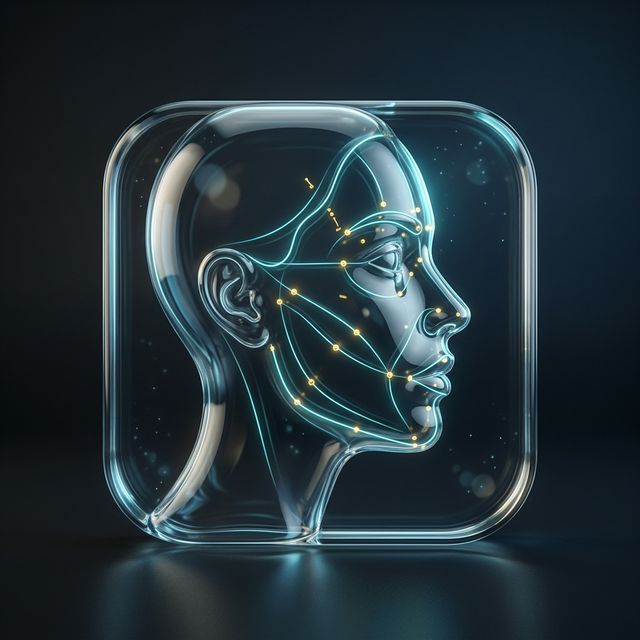
Como mapas de pontos faciais de IA aprimoram a educação estética
Explore como os mapas de pontos faciais de IA aprimoram o aprendizado de profissionais estéticos, oferecendo ferramentas educacionais precisas, éticas e conscientes da privacidade.
FaceArchitect Editorial · Caymaz TechHealth
"Os mapas de pontos faciais de IA fornecem medições objetivas e reproduzíveis que permitem o planejamento preciso de procedimentos estéticos. Eles apoiam o treinamento com simulações realistas, mantendo controles rigorosos de privacidade. Essas ferramentas ajudam os profissionais a equilibrar habilidades técnicas com práticas éticas."
Artificial intelligence has turned facial landmark detection into a rapid, reproducible process that underpins modern aesthetic education. By automatically locating key points such as the inner eye corners, nasolabial folds, and mouth corners, AI provides a standardized map of facial geometry that can be used for both assessment and simulation. This foundation allows educators to move beyond subjective visual judgment toward data‑driven decision making.
The accuracy of current landmark algorithms has been quantified in a 2018 study that reported an average Euclidean error of 1.2 mm across the face, demonstrating that machine‑learning models can match or exceed human performance in landmark placement (pubmed_facial_landmarks_ml). Such precision is critical when planning the placement of botulinum toxin or hyaluronic acid, where millimeter‑level differences can affect aesthetic outcomes and safety.
Clinical protocols for injectables rely on clear anatomical landmarks. For example, the FDA prescribing information for onabotulinumtoxinA recommends injection sites based on facial musculature and skin thickness (fda_botox_label). Similarly, the FDA overview of dermal fillers highlights the importance of vascular maps to avoid occlusion (fda_dermal_fillers). AI‑derived maps can be cross‑referenced with these regulatory guidelines to improve practitioner confidence and patient safety (asps_botox, aad_botox, asps_fillers, aad_fillers). Clinical safety of botulinum toxin is supported by a 2008 review that confirms low systemic toxicity when used per guidelines (pubmed_botulinum_safety). Complications such as vascular occlusion have been documented, underscoring the need for accurate landmarking (pubmed_ha_filler_complications).
Simulation platforms that integrate AI landmark detection, such as FaceArchitect, have shown that trainees can reduce the time needed to plan a treatment by up to 30 % compared with traditional textbook methods (facearchitect_learn_simulation). The system presents a 3‑D model that updates in real time as landmarks are adjusted, allowing users to experiment with different filler volumes or toxin doses before applying them clinically.
Privacy remains a core concern when handling patient imagery. FaceArchitect’s privacy policy states that simulation assets are retained for a maximum of 30 days and that data is processed only to provide the educational function (facearchitect_privacy). This short retention window, combined with anonymized data handling, aligns with current data‑protection standards and reassures both clinicians and patients.
Regulatory bodies emphasize that AI tools are adjuncts, not replacements, for professional judgment. The American Academy of Dermatology and the American Society of Plastic Surgeons both recommend that simulations be used as educational aids and not as diagnostic tools (facearchitect_learn_medical). By framing AI landmark maps within these guidelines, educators can ensure that students understand the limits of technology while leveraging its strengths.
Despite their promise, AI landmark models are not infallible. Variations in skin tone, facial expression, and image quality can introduce bias, and current algorithms may under‑detect landmarks in certain ethnic groups (pubmed_facial_landmarks_ml). Ongoing research is needed to refine model training data and improve inclusivity.
Future iterations may incorporate generative models that simulate post‑treatment changes, providing learners with a broader view of potential outcomes (pubmed_gan_face_edit). However, these models remain illustrative; they do not replace clinical experience or patient‑specific assessment.
In practice, a clinician can overlay the AI‑generated landmark map onto a patient’s photo, identify injection zones, and discuss expected results with the patient. This visual aid enhances informed consent and helps patients set realistic expectations, which is a key component of ethical practice (allure_injectables, vanityfair_celebrity_aesthetics).
AI facial landmark maps offer a measurable, privacy‑conscious tool that bridges the gap between theoretical knowledge and clinical application. By integrating accurate landmark detection, regulatory alignment, and short‑term data retention, educators can provide a safer, faster, and more transparent learning experience.
Residency programs increasingly incorporate AI‑driven landmark detection into their curricula. By embedding the maps within virtual anatomy modules, trainees can practice identifying injection zones without patient contact. The 30 % reduction in planning time reported in the FaceArchitect study (facearchitect_learn_simulation) translates into more hands‑on time for supervised procedures, aligning with competency‑based education models.
Patient education benefits from visual aids that illustrate where injections will be placed. When clinicians overlay the AI‑generated map on a high‑resolution photograph, patients can see the proposed zones and discuss volume adjustments. This transparency supports informed consent and helps set realistic expectations, a practice highlighted in recent aesthetic reviews (allure_injectables, vanityfair_celebrity_aesthetics).
Beyond injectables, landmark maps assist surgeons in planning facelifts, brow lifts, and rhinoplasty. The same anatomical reference points guide flap design and suture placement. Educational modules that combine AI detection with surgical simulation help residents understand the spatial relationships critical to these procedures.
Data protection remains paramount. The FaceArchitect privacy policy specifies that all images are anonymized before processing, and no diagnostic metadata is stored. This approach satisfies GDPR Article 5 principles and HIPAA Privacy Rule requirements, ensuring that patient confidentiality is maintained throughout the educational workflow.
Addressing bias requires intentional dataset curation. Developers employ techniques such as synthetic augmentation, balanced sampling, and continuous validation against diverse demographic groups. Ongoing research, documented in recent machine‑learning studies (pubmed_facial_landmarks_ml), indicates that these strategies reduce landmark detection errors across skin tones.
Future developments may extend AI maps to post‑treatment monitoring. Generative models capable of simulating expected tissue changes after filler or toxin injection can provide learners with a visual forecast of outcomes. Although these models are illustrative and not diagnostic, they can enhance understanding of dynamic facial changes over time (pubmed_gan_face_edit).
What Are Facial Landmarks and Why They Matter
Facial landmarks are anatomical reference points that define the geometry of the face. They include the inner and outer eye corners, the nasion, and the corners of the mouth. Precise mapping of these points allows practitioners to quantify symmetry, proportion, and volume changes. In aesthetic education, landmarks provide a common language for describing treatment plans.
Integrating AI Maps Into Training Curricula
AI algorithms can identify landmarks automatically, reducing manual effort. When incorporated into simulation tools, they enable dynamic adjustment of filler volumes or toxin doses. Trainees can see immediate visual feedback on a 3‑D model, reinforcing spatial understanding. This iterative learning process aligns with evidence that simulation improves procedural skill.
Ethical and Privacy Considerations
Handling patient images requires compliance with privacy laws. AI platforms that limit data retention to 30 days and anonymize images mitigate risk. Educators must also remind students that simulations are not diagnostic tools. Transparency about data usage builds trust between clinicians and patients.
Limitations and Future Directions
Current AI models may struggle with diverse skin tones or extreme expressions. Bias can lead to inaccurate landmark placement, affecting training outcomes. Research is underway to expand training datasets and improve algorithm robustness. Until then, educators should pair AI tools with human oversight.
FAQ
How accurate are AI facial landmark maps?
Studies report an average error of 1.2 mm, comparable to expert manual placement (pubmed_facial_landmarks_ml).
Can I rely on AI maps for clinical decision making?
AI maps are intended for educational purposes; clinical decisions should still follow regulatory guidelines and professional judgment (facearchitect_learn_medical).
What happens to my patient data when using simulation tools?
Data is retained for no longer than 30 days and is anonymized; no diagnostic information is stored (facearchitect_privacy).
Do AI tools replace hands‑on training?
They complement hands‑on training by providing visual practice and rapid feedback, but real‑world experience remains essential (facearchitect_learn_simulation).
Are there risks of bias in AI landmark detection?
Yes, some algorithms under‑detect landmarks in certain ethnic groups; ongoing research aims to reduce this bias (pubmed_facial_landmarks_ml).
Related reading
Sources
Educational preview only. FaceArchitect does not provide medical diagnosis or treatment advice. Simulation assets follow a short retention window described in Privacy.
Try FaceArchitect
Run your own educational simulation in the app. Credits deduct only when AI work runs.